
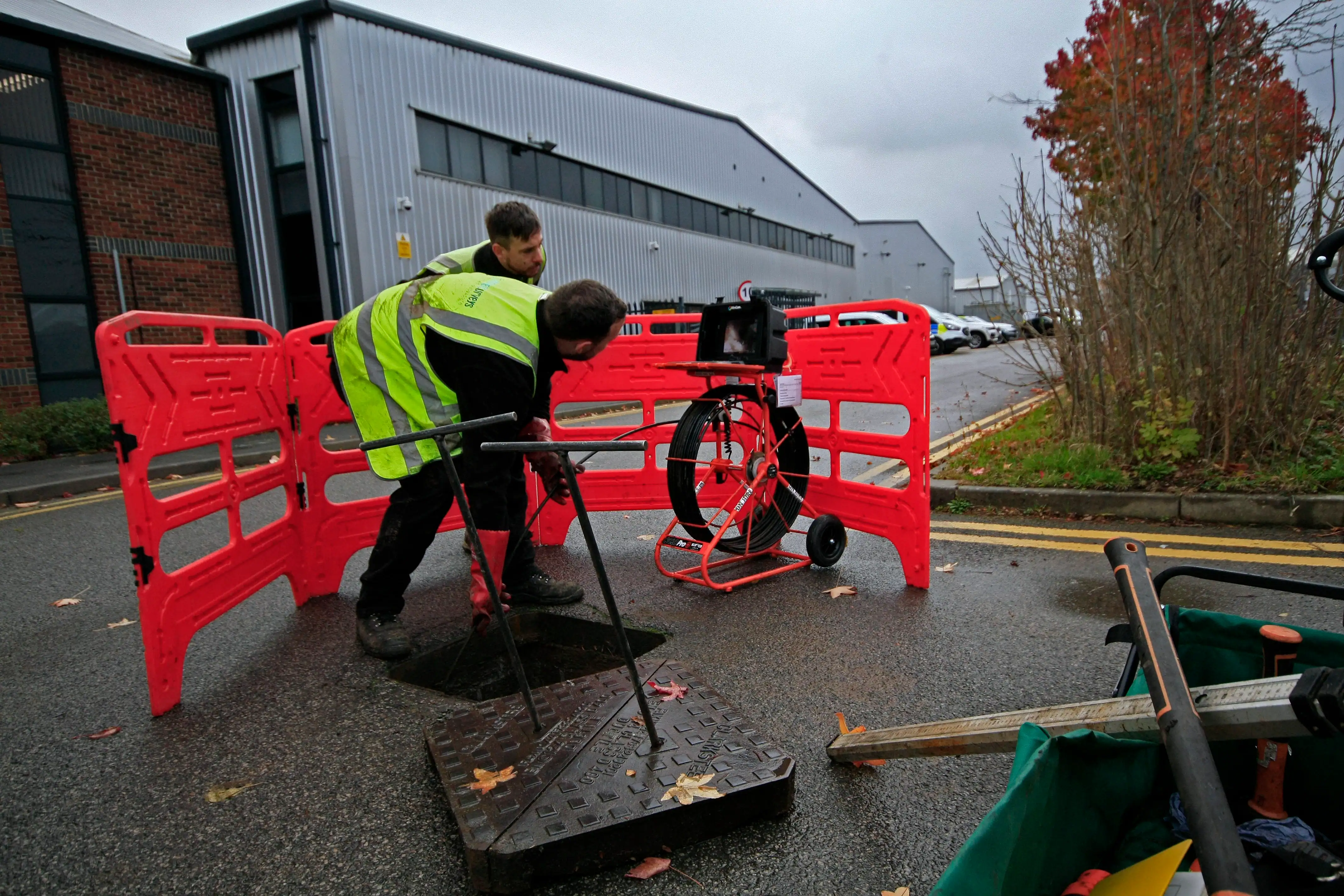
CCTV drainage surveys are the only practical way to see the condition of below-ground drainage before you buy a property, extend one, or sign off completion on a new build. Standard homebuyer reports do not cover what happens past the inspection chamber, and the cost of finding out later sits well above the cost of looking in advance.
The industry reality
Drainage problems are not visible from the surface. A homebuyer report tells you the property has drainage. A Level 2 or Level 3 RICS building survey tells you about the building and may flag visible drainage covers, but a chartered surveyor is not crawling a camera through the pipework. The drainage report is a separate instruction, and on most residential transactions nobody commissions one.
The result is predictable. Property changes hands. New owners experience repeat blockages, slow drains, or sewage backing up into the garden after heavy rain. An emergency drain clearance contractor runs a camera and finds a collapsed clay pipe under the rear extension that has been failing for a decade. Repair quote: high four figures, sometimes five if the route runs under a structure.
A CCTV drainage survey before exchange would have caught it.
What actually matters
What the camera actually inspects
A CCTV drainage survey runs a high-resolution camera through the foul and surface water drainage system from the property boundary back through accessible inspection chambers. The output is a video record, a written condition report graded against the Manual of Sewer Condition Classification, and a plan showing pipe routes, materials, diameters, and any defects found.
A competent survey will identify the drainage authority’s responsibility line (typically the boundary), distinguish between shared and private drainage under the Private Sewers Transfer regulations, and tell you exactly what falls to you as the owner.
The defects that show up most often
Root intrusion through joints, especially on older clay pipework near mature trees.
Displaced or open joints where ground movement has separated sections.
Cracks and fractures, often longitudinal in older clay or as circumferential breaks in concrete pipework.
Partial or full collapse, frequently in pipes under added structures (extensions, conservatories, driveways) where loading was never assessed.
Fat, oil, and grease build-up from kitchen waste, narrowing the pipe and accelerating blockages.
Misconnections, where foul waste discharges into the surface water system or vice versa. These are an environmental issue and can become the owner’s liability under the Environmental Protection Act.
Build-up of silt, particularly in surface water systems serving driveways and gardens without proper gully maintenance.
When you actually need a CCTV drainage survey
Before exchange on any property over thirty years old.
Before any extension that will sit over existing drainage, even partially. Building Control will ask for evidence of the drain run and condition.
After repeat blockages, slow drains, or any sign of sewage backing up.
On any property with a septic tank, cesspit, or package treatment plant. The 2020 General Binding Rules tightened owner responsibilities significantly.
At the end of a build, before signing off, to confirm new drainage has been installed correctly and not damaged by later trades.
When a property insurance claim involves drainage. Insurers increasingly require a CCTV report before authorising work.
Reading the report properly
The condition grades run from 1 (acceptable) to 5 (collapsed or imminent collapse). A grade 4 or 5 is an immediate issue. Grade 3 defects need a planned response within a defined period. Grade 1 and 2 findings are noted for monitoring.
Two things to check in any report you receive:
The plan should show pipe diameters and materials, not just routes. A 100mm clay foul drain and a 150mm concrete surface water drain have very different replacement implications.
The video file should be supplied, not just stills. Defects look different in motion, and a second opinion is only useful if there is footage to review.
The cost gap that makes this an obvious decision
A residential CCTV drainage survey on a typical property costs in the low hundreds. A grade 5 collapse repair under a rear extension routinely runs five figures once excavation, reinstatement, and any required Building Control involvement are included. The asymmetry is the entire argument. You are spending hundreds to avoid a low-probability but high-cost surprise.
On commercial purchases the maths is more lopsided. A failed drain on a small commercial site can take the building offline and trigger trade losses that dwarf the repair itself.
A real scenario
A family completing on a 1960s detached property in Carlton commissioned a CCTV drainage survey on the advice of their conveyancer. The homebuyer report had flagged nothing unusual. The camera found a partial collapse in the foul drain where it ran under a side extension added by previous owners in the early 2000s. The extension had been built over the drainage with no protective measures, and the pipe had cracked under loading.
The repair cost £8,400 including breaking and reinstating part of the driveway. The buyers negotiated the figure off the purchase price before exchange. Without the survey, the first they would have known about the problem was the first significant blockage, probably within two winters, with no recourse against the seller.
The insight most buyers miss
A CCTV drainage survey is not a building survey upgrade or a luxury check. It is a separate instruction that nobody else in the transaction is doing for you. The conveyancer searches for sewer maps. The chartered surveyor inspects the building. The mortgage valuation looks at value, not condition. The drainage falls in the gap between all three. If you do not commission the camera, no one does.
Why Premier Surveys works this way
At Premier Surveys, our CCTV drainage surveys are issued with full video footage, a written condition report graded to the Manual of Sewer Condition Classification, and a CAD or PDF plan showing the drainage layout, pipe materials, and any defects found. We work to the standards expected by Building Control, drainage authorities, and insurance providers, so the report does not need to be repeated for the next party who asks for it.
Conclusion
The reason CCTV drainage surveys get skipped is simple: nobody else in the transaction chain is responsible for prompting them. The reason they pay back is also simple: drainage failures are expensive, invisible from the surface, and disproportionately common in older properties. Spending a few hundred pounds before exchange to see what is actually under the ground is one of the few survey decisions where the cost-to-risk ratio is not even close.